

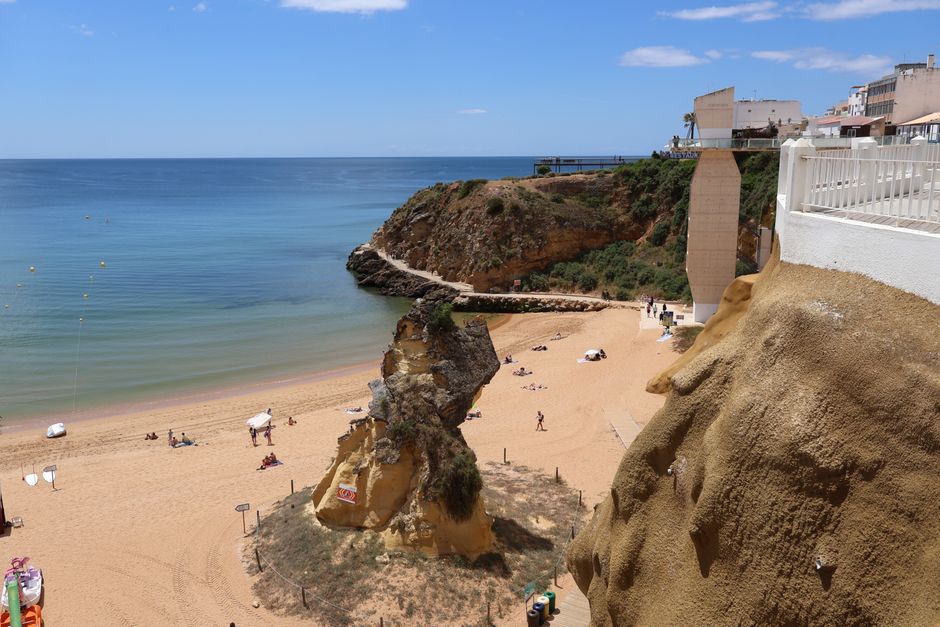
Lagos has some of Portugal’s most photogenic coast, but for swimming you care less about surf breaks and more about how you get in, how sheltered the water feels, and where the currents pull.
Use the tips below to pick beaches that suit a swim day—then choose quieter options when the town centre is busy.
How to Choose Lagos Beaches for Swimming
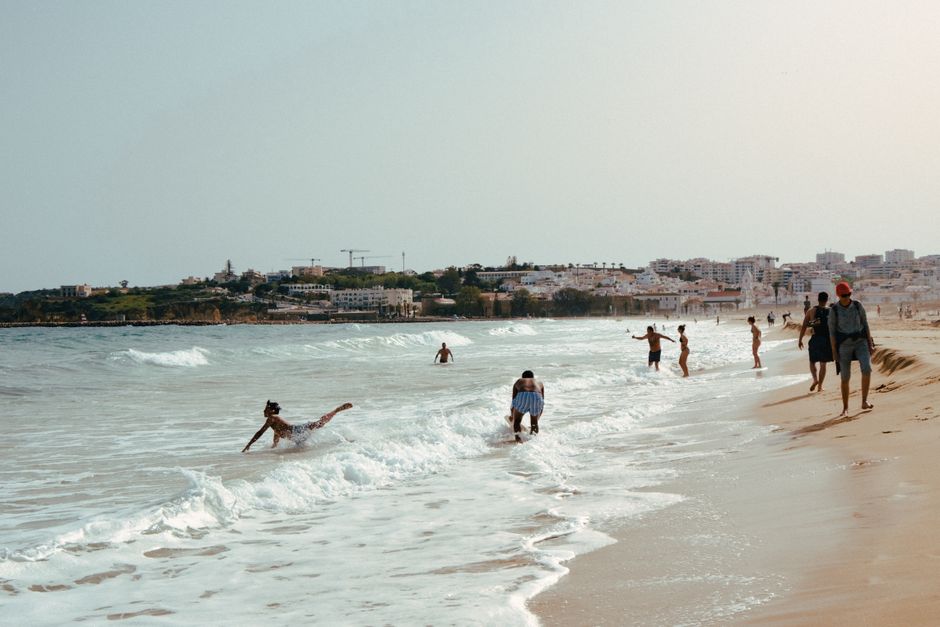
Coves can feel calmer, but they often have narrower entrances. That can mean gentler water on a good day—and more noticeable flow if swell or wind lines up the wrong way.
Read wind and swell before you commit
Lagos sits on the Atlantic, so conditions can change quickly. Before heading down a staircase or into a bay, look for:
- steady onshore wind (often means rougher surface chop)
- bigger waves wrapping around headlands (often means stronger push/pull near rocky edges)
- a “glassier” look in the sheltered side of the beach (usually the best swimming zone)
When in doubt, choose the beach that looks most sheltered rather than the one with the most dramatic scenery.
Match your swim to tides and sea space
Tides and swell direction can change how safe a swimming area feels, even within the same beach.
- If you’re trying to avoid slippery rock, go at a tide that keeps more water over sand rather than exposing uneven patches.
- Pick the widest part of a cove for the easiest “in and out” route.
- Avoid swimming right up against the rocks where currents can funnel.
Golden Sandy Beaches With the Easiest Entries

Meia Praia
Meia Praia is the long, sandy stretch that most people associate with Lagos beach time. It’s the easiest option if you want to swim without planning for steep access.
What to know for swimming:
- You’ll usually find the simplest entry along the sandy stretches where you can wade out gradually.
- The water can feel calmer on the beach’s more sheltered side; if one end looks churnier, shift along rather than forcing it.
- Currents are influenced by swell and wind, so avoid edges where waves wrap around.
Practical arrival logistics:
- From the centre of Lagos, you can reach Meia Praia by a direct coastal walk or a short local ride.
- In summer, expect busier access points and more limited parking closer to peak hours. Plan to arrive earlier if you want a quieter patch of sand.
Porto de Mós
Porto de Mós is a sandy beach tucked closer to the cliffs, but it still offers a proper swimming shoreline once you’re down there.
What to know for swimming:
- The swimming area tends to be best where the sand is continuous and you’re not forced to jump in off rock.
- Because it’s more sheltered than the open stretches, it can suit calmer swim days. If the sea is energetic, choose a flatter pocket and stay away from the sides.
Practical arrival logistics:
- Access is typically via footpaths and stairways from the nearby viewpoints/parking areas.
- Wear non-slip sandals: the approach paths and rock edges can be slick when damp.
- If you’re travelling with a stroller or heavy beach gear, Porto de Mós is doable, but it’s not the “walk-on-from-a-flat-road” experience.
Praia do Martinhal
Praia do Martinhal is often a good option when you want a quieter, family-friendly feel without driving far. The setting is more spacious than the small cliff coves.
What to know for swimming:
- Look for the widest, smoothest sand sections for an easier entry.
- When wind picks up, the surface can get choppier—choose the side of the beach that feels least affected.
- Stay further from rocky edges where the water can move faster.
Practical arrival logistics:
- It’s a short ride/taxi distance from Lagos town. Many visitors make it a “half-day” stop because it’s easier to relax here than to keep switching between coves.
- In peak season, the beach can still fill, but it generally avoids the extreme crowding of the most famous coves.
Cove Beaches That Feel Calmer (And How to Access Them)
These bays can be excellent for swimming when conditions line up—especially if you stay in the sheltered interior areas and avoid the rock edges.
Praia da Dona Ana
Dona Ana is a classic Lagos swimming cove, but it can be busy. The key is timing and knowing where to enter from.
What to know for swimming:
- The water often feels calmer deeper into the cove than near the entrance.
- Currents can still move through a cove, especially when swell wraps around. Swim in the wider, sandier zones rather than right by the rock walls.
- If waves start pushing water toward one side, move with the calmer pocket instead of staying fixed.
Practical arrival logistics:
- Expect a stair-and-path approach from above. The descent can feel long in hot weather, and it’s not ideal for heavy rolling luggage.
- The cove fills early in the day. For a quieter swim, plan to arrive before peak beach hours.
Praia do Camilo
Camilo is smaller and more enclosed than Dona Ana, which often makes it feel intimate—and sometimes calmer—depending on the sea state.
What to know for swimming:
- Choose calm conditions. If the sea is choppy, the cove can feel crowded and “bouncy,” even when the water looks beautiful.
- The safest-feeling swimming zone is usually the interior sand area away from the rocks.
- Avoid lingering where waves break around the sides.
Practical arrival logistics:
- Access involves steep steps and a narrow approach corridor. It’s best if everyone in your group is comfortable with steps.
- Wear grippy footwear for the descent and for leaving the beach when the rocks get slick.
Boca do Rio
Boca do Rio is a less-hyped option that can work well for swimmers who want a calmer feel than the most famous coves.
What to know for swimming:
- It’s more exposed than the Instagram-famous inner coves, so swim only when the water looks organised and not violently surging.
- The best approach is to find the smoothest water near the sandier edges and keep distance from rock outcrops.
- Because the coastline shape can funnel movement, avoid swimming at the very margins where the water races.
Practical arrival logistics:
- Access is typically via a coastal route down to the beach area. Give yourself a little buffer time and keep an eye on footing.
- It can be quieter than Dona Ana/Camilo, but it’s still worth arriving early if you want a genuinely calm swim spot.
Quiet Alternatives When the Centre Gets Busy
If the main beaches feel packed, you’ll get a better swim day by shifting your base—either to nearby neighbourhood beaches or to beaches a short drive from Lagos.
Praia da Luz
Praia da Luz is often a go-to for travellers who want the Lagos region without the busiest cove crowds.
What to know for swimming:
- It’s generally easier to find a comfortable entry and a place to spread out.
- On windy days, pick the section where the water surface looks least disrupted.
- As always around the Atlantic, keep distance from headlands and rock edges.
Practical arrival logistics:
- It’s a short ride from Lagos town. Many visitors treat it as a “sleep in, go swim later” option because it’s not tied to the strict walking routes of the cliff coves.
- Parking can still fill at peak times, but it’s usually more manageable than the immediate centre of Lagos.
Praia do Burgau
Burgau is one of the quieter alternatives people use when they want a calmer bay feel without giving up swimming time.
What to know for swimming:
- The water tends to feel more sheltered than the most open stretches, so it can be a better choice when the swell is lively.
- Still, currents can shift with wind direction—stick to the sand zones and avoid the edges where water wraps around.
Practical arrival logistics:
- From Lagos, expect a short drive (or a taxi) and then an easy walk to the beach areas.
- Because it’s slightly removed from the centre, it can work well for a morning swim before heading back for lunch.
Getting There and What to Expect on Arrival
Parking and walk time: plan for “last-mile” effort
Lagos beaches often involve some walking, even when you park nearby.
- Meia Praia and Praia do Martinhal usually feel easier for a straightforward swim day.
- Dona Ana, Camilo, and Boca do Rio are rewarding but involve more effort—stairs, uneven rock sections, and slippery surfaces when damp.
If you’re carrying a cooler or lots of gear, keep it light and expect to reposition along the beach once you arrive.
Currents, sea state and where swimmers usually stay
For safer swimming, aim for zones that give you options:
- swim where you can stand up quickly if conditions change
- keep distance from the sides and rocks (those are the first places currents concentrate)
- move along the beach if you notice the water “pushing” from one direction
On days when the sea looks energetic, quiet alternatives can still be calmer—but only if the sheltered side of the bay actually looks smoother.
Next Steps
Pick two beaches for your trip: one for an easy, sandy swim (Meia Praia, Porto de Mós, or Praia do Martinhal) and one quiet backup if crowds or wind build (Praia da Luz or Praia do Burgau). Then plan your mornings around early arrival for the coves, and keep your footwear and access options ready for stair descents and slick rock edges.