

How to Spot Calm Water on Oahu (Before You Pick a Beach)

Check surf and wind, not just the beach name
Before you commit to a shoreline, scan current conditions for:
- Surf height and wave period (long-period swell usually means bigger sets)
- Wind direction and speed (offshore and light winds help; onshore wind often stirs sand)
- Current strength (strong currents can make snorkeling harder even when waves look small)
If you see “small surf” but strong wind, expect lower visibility and more surface chop.
Look for sheltered geography
For calmer swimming and easier snorkel entries, you’re looking for beaches in:
- Bays and coves that reduce direct swell
- Leeward (protected) stretches where wind has less fetch
- Lagoon-style areas with calmer water between structures
Mind the entry: shorebreak can be the real problem
Even when the water looks quiet, the zone right at the beach can be bumpy. When you arrive, do a quick check:
- Watch the last 10–20 seconds of each set.
- If waves are dumping directly onto the sand, consider snorkeling farther out or switch beaches.
- If you’re not confident with waves, start with kneedeep to waistdeep water and move only if it’s truly steady.
Lanikai Beach and Kailua Beach Park (East Oahu)

Lanikai Beach: Small-Wave Days and Easy Snorkel Goals
Lanikai is famous for its calm, shallow look and pretty shoreline. For swimming and snorkel attempts, you’ll usually get the best results when:
- The wind is lighter than average
- The water surface stays smooth rather than choppy
What to expect:
- Swimming: generally friendlier than the north shore.
- Snorkeling: best for short swims and near-shore viewing rather than long open-water routes.
Kailua Beach Park: Plenty of Space and Consistent Family Swimming
Kailua Beach Park sits next to Lanikai and often offers a similar “protected” feel. It’s a strong choice when you want:
- Room to spread out
- A beach setup that suits beginners (as long as conditions are calm)
For snorkeling, focus on areas where you can stay close to shore and keep an eye on how quickly conditions change if a breeze picks up.
Accessibility and practical planning for East Oahu
If you’re basing yourself around Waikiki, allow extra time for the drive and for parking decisions once you arrive. On calm-water days, these beaches can fill up quickly.
Before you go, plan for:
- Arriving early if you want the easiest entry points
- Bringing a mask and fins even if you think you’ll “just swim” (visibility can be excellent)
- Respecting any posted shoreline guidance—protected zones are often that way for a reason
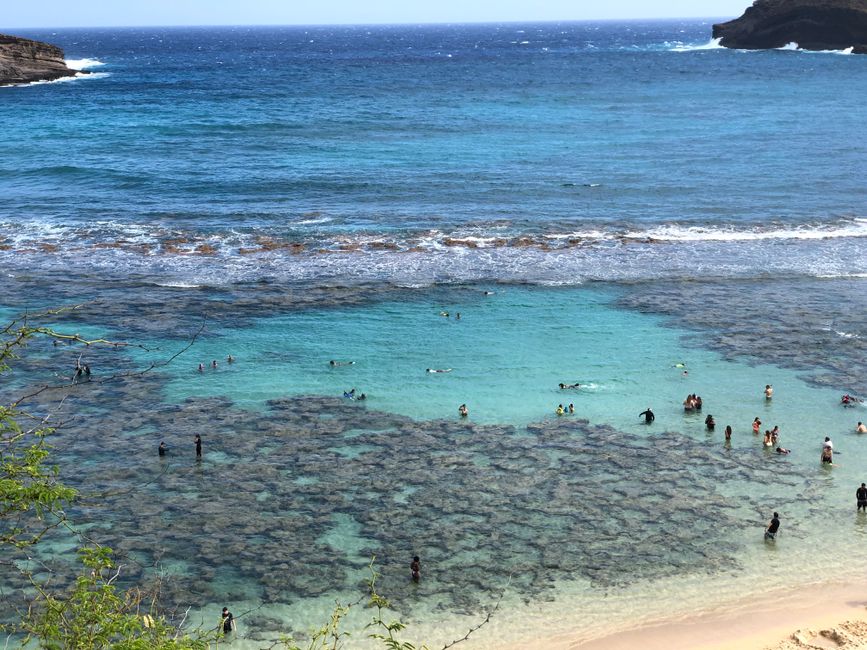
Hanauma Bay: Protected Snorkeling Water
Hanauma Bay is the kind of place where calm water can be built into the geography. It’s a volcanic crater setting, which often means gentler conditions compared with the open coast.
Hanauma Bay: Snorkeling First, Swimming Second
For most travellers, Hanauma Bay shines for snorkelling rather than long swims. When the water is clear, you can have an excellent near-shore experience.
A few realities to keep your expectations straight:
- Snorkelling quality depends on conditions (clarity can change day to day)
- The best viewing is usually near the protected area, not in deep open water
Why the water can feel calmer here
The bay’s shape reduces direct exposure to ocean swell. Even so, you should still expect:
- Periodic changes across the day
- Potential crowds during peak times (and busy water around entry)
Booking and on-site rules (check before you arrive)
Hanauma Bay commonly operates with conservation-focused rules and visitor limits. Because policies can change, you’ll want to check current requirements ahead of time—especially anything related to entry, snorkeling gear rules, and whether reservations are needed.
For a smoother snorkel day, also pack:
- Reef-safe sunscreen if you use it
- A way to keep your essentials dry on the shoreline
- An understanding of where it’s safe to enter and exit
Ala Moana Beach Park and Magic Island (Honolulu)
If you want calm water closer to the city, these spots can work well—particularly on days when wind is moderate and waves aren’t pushing in.
Ala Moana Beach Park: Easy Swimming When Conditions Stay Soft
Ala Moana is a popular Honolulu shoreline with areas that can feel more manageable than open-coast beaches. It’s a good pick if you’re:
- Staying near Waikiki or in central Honolulu
- Looking for swim-friendly water with calmer stretches
For snorkeling, treat it as near-shore exploration. Visibility and fish activity vary, so it’s best suited for shorter sessions.
Magic Island: Sheltered Feel and Beginner-Friendly Water
Magic Island (the shoreline near the Ala Moana side) can offer a more sheltered feeling than some more exposed beachfront areas. On the right day, it’s a comfortable place to:
- Swim without dealing with heavy surf
- Snorkel in short bursts, staying close to where you entered
How to choose the calmest strip once you’re there
When you arrive, pick the calmer side of the shoreline by watching the waterline:
- Choose areas where sets are gentle and don’t collapse strongly onto the sand.
- Look for spots where swimmers are staying upright without battling constant surge.
- If the surface turns choppy, switch to a different beach rather than forcing it.
If you’re travelling with kids, prioritize ease of entry and a beach where you can exit quickly.
Ko Olina Lagoons: Man-Made Calm and Snorkel-Friendly Edges
Ko Olina is built around lagoon-style water that can be significantly calmer than surrounding open ocean. That makes it a strong match for “calm water” travellers.
Ko Olina Lagoons: Best for Steadier Swimming
When ocean conditions are rough elsewhere, lagoon areas often stay more predictable. For swimming and light snorkeling, you’ll usually have the easiest time when you:
- Stay within the lagoon zones
- Keep your snorkel plan close to shore and avoid open-ocean crossings
Picking the calmer areas inside the lagoon zone
Even within lagoon-style areas, conditions can vary across the water. Your best approach:
- Start where entry is straightforward
- Observe water movement around the edge—if it feels faster, move back toward calmer sections
If your priority is calm water, treat “no current” as your target and avoid spots where you feel pulled.
Access and what to bring for a full-day lagoon visit
Ko Olina is convenient for a relaxed beach day, but calm-water beaches still benefit from smart planning.
Bring:
- Snorkel gear (mask and fins make it easier to enjoy good visibility when you find it)
- Water shoes if the lagoon edges are uneven
- A dry bag for phone and small valuables
Also, expect that popular calm-water days can mean more people in the shallows, especially around photo-friendly stretches.
Final Thoughts: What to Do Next
Choose your beaches based on shelter and exposure, then verify the day’s wind and surf before you set off. If you want the easiest snorkeling experience, plan for near-shore sessions, arrive early for calm-water picks, and be willing to switch beaches if conditions turn choppy.
For your itinerary, shortlist two “Plan A” beaches and one backup sheltered option—Oahu rewards flexibility when the trades shift.