

Picking a neighbourhood in Seoul is half the trip. You’ll save time by staying close to the subway lines that serve your plans—then you can walk between shopping streets, restaurants, and late-night bars without burning hours in transit.
Below are the most practical bases for travellers prioritising shopping, food, and nightlife, ranked by the kind of evenings you’re planning.
Best Neighborhoods for Shopping: Myeongdong and Dongdaemun

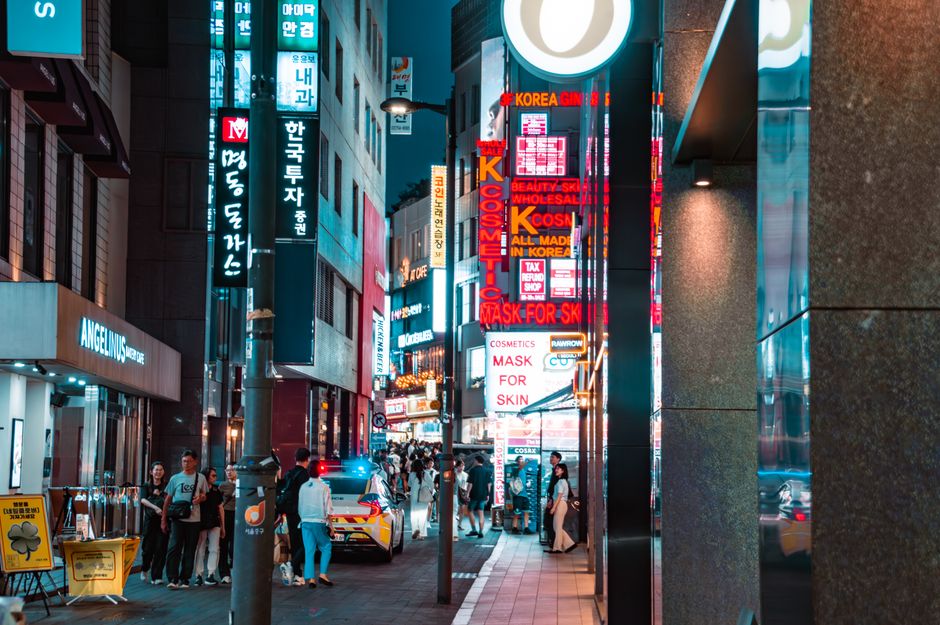
Myeongdong
Why it fits: Myeongdong is the classic Seoul shopping zone, especially for beauty, streetwear, and quick bites between errands. It’s also easy for first-timers because the area is built around major transit access.
Shopping you’ll actually use:
- Cosmetics counters, skincare brands, and lots of “try-it-now” sampling
- Department stores and clustered retail streets with frequent sales
- Smaller fashion shops for everyday tees, bags, and accessories
Food + nightlife feel: You’ll find restaurant rows and snack-heavy streets—great for dinner plus dessert, but the vibe is more “busy and energetic” than “clubby.” Late evenings are normal.
Hotel price expectations: Expect to pay a premium for location. A mid-range double often lands around the mid-100s to low-200s USD per night range (or the Korean equivalent), while true budget rooms can be limited and may feel smaller.
What to watch: The busiest streets can feel crowded in evenings and on weekends. If you’re sensitive to noise, aim for a quieter side street rather than the main retail road.
Dongdaemun
Why it fits: Dongdaemun is ideal when shopping isn’t a daytime activity. You’ll find major malls, fashion-focused streets, and a “keep going” energy that suits late-night browsing.
Shopping you’ll actually use:
- Fabric and fashion wholesale-style pockets (if you like browsing materials)
- Large retail complexes with longer opening hours than most neighbourhoods
- Style-driven shopping for street fashion and seasonal collections
Food + nightlife feel: It’s more retail-first than bar-first, but you’ll eat well throughout the night. Many travellers treat it as a one-stop base: shop, grab food, then shop again.
Hotel price expectations: Often good value compared with the most central tourist-heavy zones—especially for business and mid-range hotels. Typical mid-range rates commonly sit in the low-to-mid hundreds USD equivalent per night, depending on room size and how close you are to the main lines.
What to watch: If you want a calm sleep, pick carefully. Late-night shopping crowds mean noise can carry in the most central blocks.
Best Neighborhoods for Food and Nightlife: Hongdae and Itaewon
Hongdae
Why it fits: Hongdae is built for youthful energy—street performances, casual bars, and lots of places that feel like they’re designed for groups.
Food you’ll actually want:
- Korean comfort food plus plenty of late-night casual dining
- Dessert spots and “snack hopping” options within short walks
- A dense mix of cafes and small restaurants (easy to find a backup plan)
Nightlife feel: Live music venues and bar streets are the headline. The area tends to be lively later, especially around weekend evenings.
Hotel price expectations: Expect mid-range hotels to land roughly in the mid-100s to low-200s USD equivalent per night range when you book close to peak dates. Budget options exist, but rooms can be compact.
What to watch: Hongdae can be loud on weekends. For a better night’s sleep, choose a hotel that’s a few blocks off the busiest bar streets.
Itaewon
Why it fits: Itaewon is for travellers who want a broader restaurant mix and nightlife that can range from cocktails to busy clubs.
Food you’ll actually use:
- International restaurants alongside classic Korean options
- Many places that work well for “everyone wants something different” groups
- Late dinners are easy to find, including vegetarian-friendly choices
Nightlife feel: You’ll see a mix of themed bars, cocktail lounges, and club-style venues. It’s a strong choice when you want to start the night with dinner and keep moving.
Hotel price expectations: Prices often sit higher than purely local neighbourhoods because it’s popular and well-connected. Mid-range doubles frequently land in the low-to-mid hundreds USD equivalent per night range; deals appear if you travel outside peak periods.
What to watch: Like any nightlife zone, the loudest pockets are concentrated near main nightlife streets. If you’re booking for sleep quality, double-check the quietness of the exact street.
Best Neighborhood for Trendy Nights: Gangnam
Gangnam works well when your priority is upscale dining, modern shopping, and nightlife with a polished look.
Gangnam
Why it fits: You’ll find designer-style shopping streets, modern entertainment venues, and restaurants that range from casual-chic to high-end.
Shopping you’ll actually use:
- Big-brand and department-store shopping
- Upmarket streets for accessories, fashion, and “try the newest trend” browsing
- Easy connections to other neighbourhoods for day trips
Food + nightlife feel: Gangnam is a strong match if you want dinner in a stylish area, then bars and late-night spots that don’t feel like a backpacker-only scene.
Hotel price expectations: This is often one of the pricier bases. Expect typical mid-range rates to be toward the mid- to high-hundreds USD equivalent per night, with luxury hotels higher. If you’re trying to control costs, look for business hotels slightly away from the very busiest shopping intersections.
What to watch: Because it’s fashionable and central, peak dates can push prices up quickly. If you’re travelling during holidays or major events, lock in your hotel earlier rather than later.
Best Neighborhood for Culture and Market Shopping: Insadong & Jongno
If you want traditional Seoul alongside shopping and evening street life, Jongno and Insadong are usually the most convenient pairing.
Insadong & Jongno
Why it fits: This area blends market browsing, cultural sights, and lots of restaurants that suit both early evenings and relaxed dinners.
Shopping you’ll actually use:
- Traditional crafts, souvenirs, and market-style streets
- Tea shops, bookstores, and gift browsing that doesn’t feel like generic mall shopping
- Easy stops for daytime sightseeing that still work on your “food and nightlife” days
Food + nightlife feel: Evenings are calmer than Hongdae or Itaewon, but you’ll still find plenty of places to eat—often with a more local atmosphere. It’s a great base if you want nightlife that feels like “going out to eat and have a drink,” rather than club-hopping.
Hotel price expectations: Prices can vary widely depending on how close you are to top attractions. Mid-range hotels often fall in the low-to-mid hundreds USD equivalent per night range during common travel seasons. On quieter streets, you may find better value.
What to watch: Some of the most famous streets can attract heavy foot traffic. If you’re planning early mornings, choose a location that gives you access to quiet side streets and straightforward subway walks.
How to Choose the Right Area for Your Trip
1) Stay within a 5–10 minute walk of a major subway exit
In Seoul, the difference between a “great base” and a “annoying commute” is often one or two blocks. You’ll be happier if you can get to a subway line quickly after late dinners.
2) Match your vibe to the hours you’ll actually be out
- Myeongdong: best if you shop in the evening and want lively streets
- Dongdaemun: best if your shopping runs late into the night
- Hongdae: best if you want bars and live energy
- Itaewon: best for a mix of international food and nightlife
- Gangnam: best if you want polished dining and trendy nightlife
- Insadong & Jongno: best if you want culture plus relaxed evenings
3) Avoid the most tourist-heavy blocks at peak times
If you’re travelling on weekends or during high season, the most obvious streets can feel like a queue. Pick a hotel just far enough away that you can still walk to the action, but return to a quieter street.
Final Thoughts: Lock In Your Base
Pick the neighbourhood that matches your evening routine first—shopping zone, food-and-bars zone, or culture-and-dinner zone—then choose a hotel close to the subway exit that serves it. Once you’ve decided, book sooner for Hongdae, Itaewon, Myeongdong, and Gangnam during peak dates, and double-check room sizes in central areas where space can be tight.